
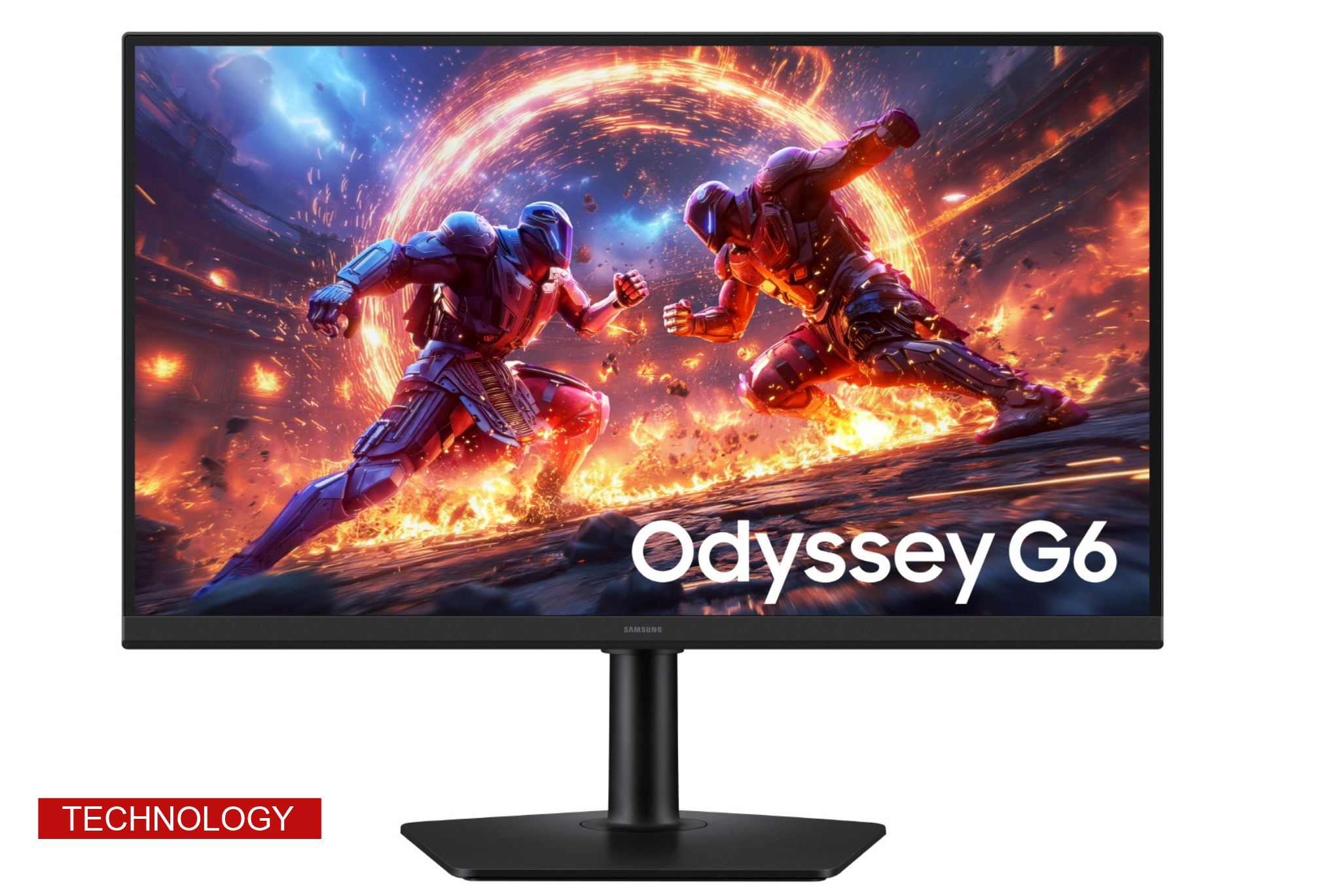
Samsung’s newest gaming monitor is set to hit U.S. stores in December. The company announced on Nov. 23 that its 27-inch Odyssey G6 (G60H), the world’s first 1,100Hz gaming monitor, will retail for $899.99.
Samsung originally unveiled the monitor in December 2025 with a refresh rate of 1,040Hz. That number has since increased, although gamers will have to play at 720p to reach the advertised 1,100Hz. At its native 1440p resolution, the monitor runs at up to 600Hz.
A refresh rate measures how many times a screen updates per second. While a standard computer monitor typically runs at 60Hz, many PC gamers have upgraded to 144Hz or 240Hz displays over the years. The difference is especially noticeable when moving the camera or following objects across the screen.
In competitive games like Counter-Strike 2, Valorant, and Overwatch, smoother movement can help players keep track of opponents during fast-paced encounters.
Samsung has also introduced Odyssey Clear Motion, a technology developed to reduce motion blur. The company plans to bring the feature to other monitors in its Odyssey lineup.
The Odyssey G6 specifications include:
- 27-inch Fast IPS display
- 2560 x 1440 native resolution
- 1-millisecond response time
- NVIDIA G-SYNC compatibility
- AMD FreeSync Premium
- HDR10+ Gaming
- Black Equalizer
- One DisplayPort 2.1 and two HDMI 2.1 ports
- Adjustable height, tilt, swivel, and pivot
Anyone considering buying the monitor should check their graphics card first. Samsung confirmed that AMD Radeon RX 6000 series cards and older models cannot support refresh rates of 1,000Hz or higher. AMD FreeSync Premium is also unavailable in 1,100Hz mode.
Getting anywhere near 1,100 frames per second is another matter. Even an expensive gaming PC may struggle to reach those numbers, particularly in newer games. Purchasing the monitor alone will not improve frame rates, and some buyers may need to upgrade their processor or graphics card.
There is also the question of how much of a difference players will actually notice. At 240Hz, the screen updates roughly every four milliseconds. Increasing that to 1,100Hz brings the time down to less than one millisecond. The improvement becomes increasingly subtle as refresh rates climb.
Not everyone wants to sacrifice graphics for speed, either. Someone playing Red Dead Redemption 2, Microsoft Flight Simulator, or Cyberpunk 2077 might rather spend that money on a 4K display and enjoy the visual details.
PlayStation 5 and Xbox Series X owners would also be paying for features their consoles cannot fully utilize, as both systems support gaming at up to 120Hz.
With plenty of 144Hz and 240Hz monitors available at a fraction of the price, Samsung’s newest release will likely find its audience among esports players and PC gaming hobbyists who already own high-end hardware.








0 Comments