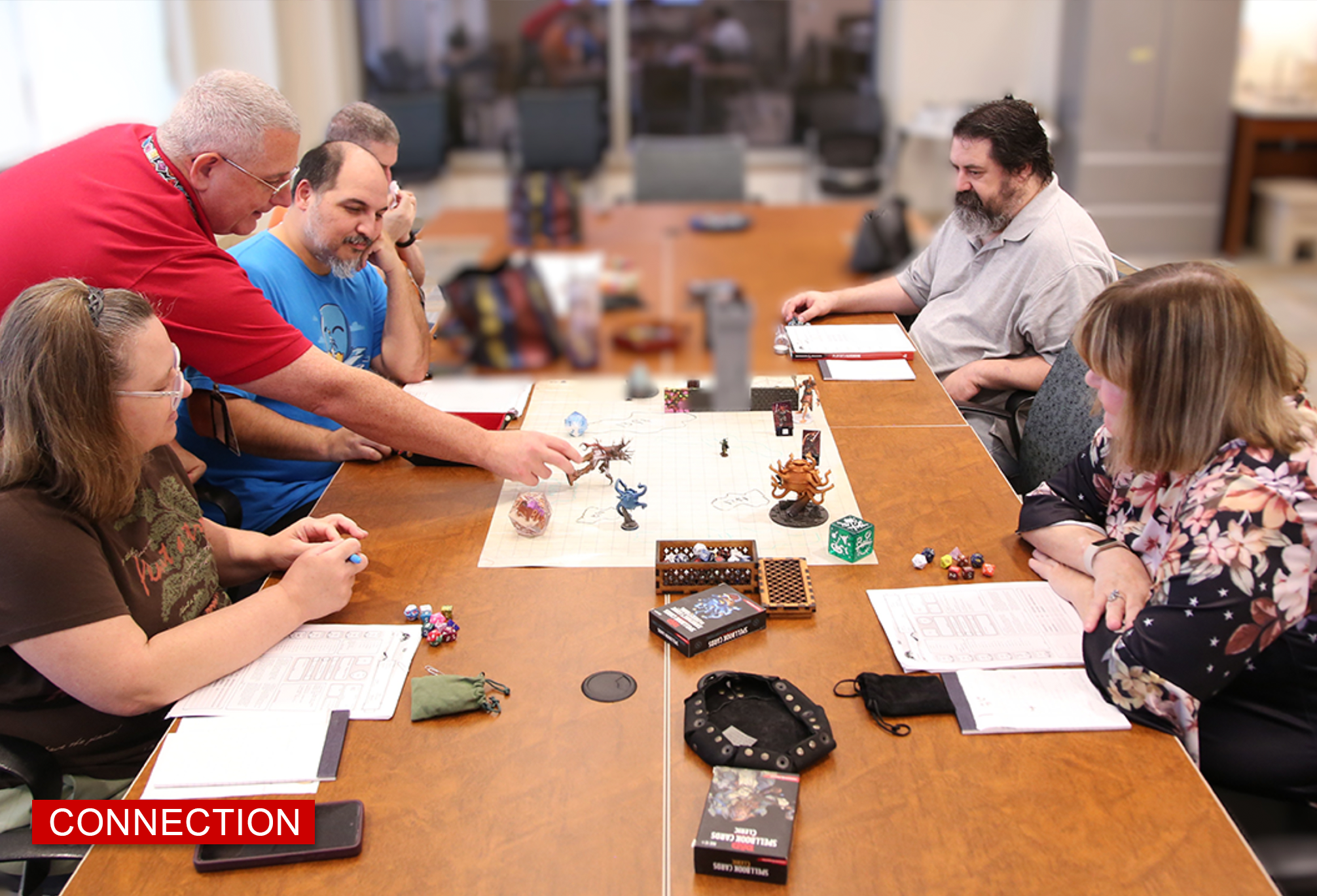
At the Orlando VA, Veterans are not just rolling dice. They are rebuilding trust, practicing teamwork, and finding a reason to sit at the same table again.
The program is called REVEAL, short for Reimagining Veterans’ Emotions, Actions, and Life Skills. The group meets twice a month at the Orlando VA’s Lake Nona campus, giving Veterans a steady place to join an ongoing Dungeons & Dragons campaign centered on teamwork, communication, and shared problem-solving.
For some Veterans, that kind of setting matters. A traditional group environment can feel too direct. Dungeons & Dragons gives participants something else to focus on. They step into a shared mission, build a character, make decisions with a team, and work through challenges together.
The program was developed by Navy Veteran Victor Mitchell, who has spoken about gaming as a way to help Veterans reconnect after trauma and isolation. The American Legion previously covered Mitchell’s work at Gen Con, where he discussed how tabletop role-playing games can bring Veterans together and help them learn tools tied to mental health issues such as PTSD.
That is one reason Dungeons & Dragons can work well in a Veteran setting. The game creates structure without feeling clinical. Every session gives players a role, a mission, and a group that depends on them. The story is fictional, but the interaction is real.
Spectrum News 13 reported that Veterans in the Orlando VA program said the sessions have helped reduce stress and encourage socialization. Participants described the game as a way to get out of the house, use their imagination, and spend time with people in a welcoming setting.
Research on tabletop role-playing games is still developing, but several studies support the idea behind programs like REVEAL. A 2024 scoping review published in Simulation & Gaming found that tabletop role-playing games may help promote cognitive and psychosocial skills, reduce stress, and support interventions tied to social anxiety, depressive symptoms, and autism spectrum disorders.
A 2022 review also found that role-playing games could be useful as a support tool in therapy. Another study focused on Dungeons & Dragons found links between play and mental health measures such as self-esteem and self-efficacy.
For Veterans, the social side may be just as important as the game itself. Military service often creates a strong sense of belonging through mission, routine, and shared responsibility. After service, many Veterans lose that daily structure. Gaming groups can help fill part of that gap by giving people a regular place to show up and be part of something.
Dungeons & Dragons also gives Veterans a safer way to communicate. Players have to listen, solve problems, manage frustration, and make decisions with incomplete information. Those are familiar skills for many who served, but the game lets them use those skills in a different setting.
A Veteran who may not want to attend a traditional support group may still be willing to join a campaign. Over time, those small moments around the table can turn into trust.






0 Comments