
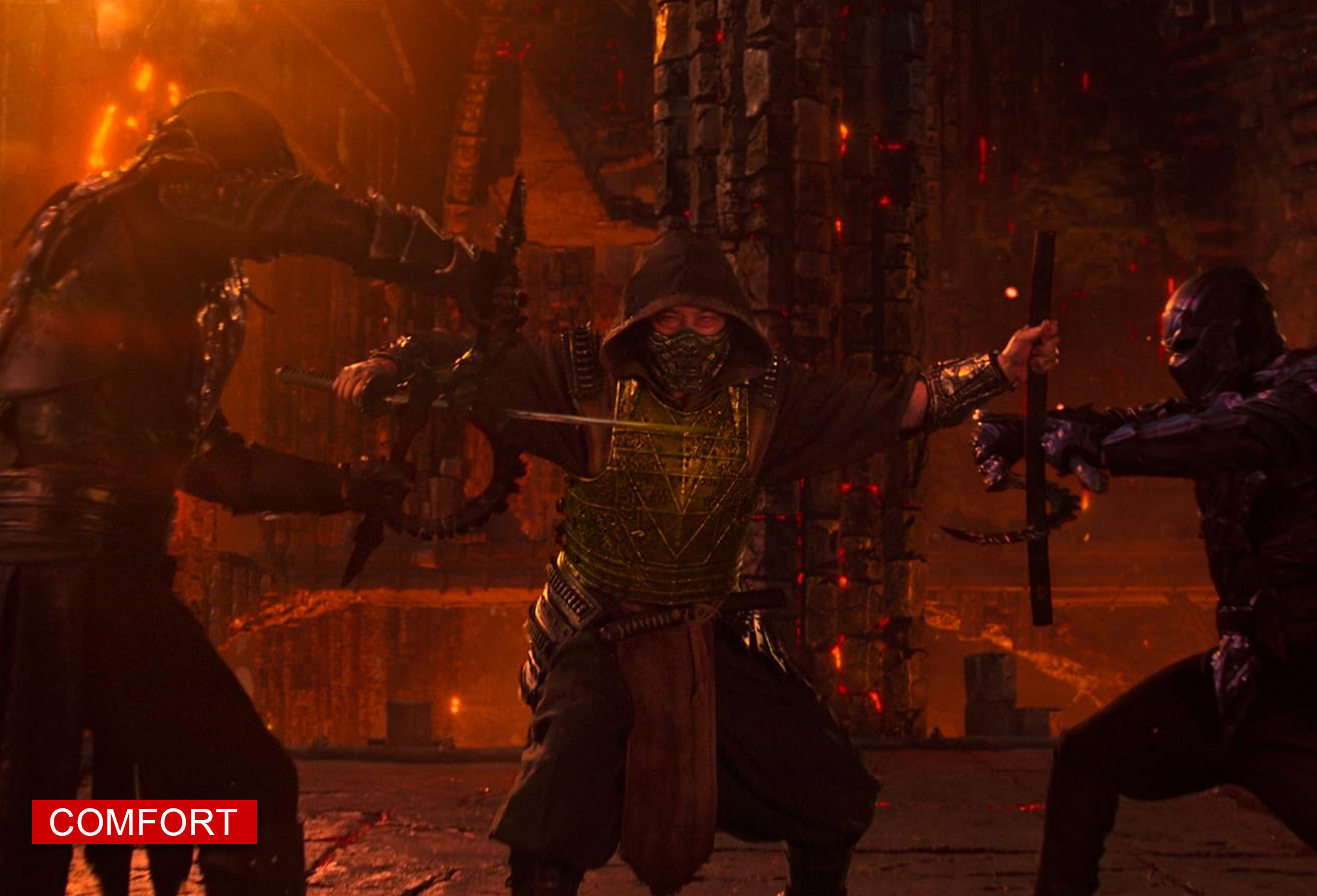
Mortal Kombat II brought one of gaming’s most recognizable fighting franchises back to theaters on May 8, continuing the story that restarted on the big screen in 2021. The sequel brings the focus closer to the tournament, classic fighters, and the Outworld conflict fans have long connected with the series.
Mortal Kombat Returns to the Big Screen
The new film adds several major characters from the games, including Johnny Cage, Kitana, Jade, Shao Kahn, Baraka, Queen Sindel, Noob Saibot, and Quan Chi. The cast includes Karl Urban as Johnny Cage, Adeline Rudolph as Kitana, Tati Gabrielle as Jade, Martyn Ford as Shao Kahn, and Joe Taslim returning in a new role as Noob Saibot.
The sequel follows the 2021 reboot, which returned the franchise to live action after years away from theaters.That film introduced a new version of Earthrealm’s fight against Outworld, but many fans wanted more of the tournament and more familiar fighters.
Mortal Kombat first reached theaters in 1995 with a film directed by Paul W.S. Anderson. The movie brought Liu Kang, Sonya Blade, Johnny Cage, Raiden, Scorpion, Sub-Zero, and Shang Tsung to a wider audience. Its tournament story and techno theme helped it become one of the more remembered video game movies of the 1990s.
From Arcade Hit to Gaming Icon
The franchise began in 1992, when Midway Games asked Ed Boon and John Tobias to create a fighting game that could compete with Street Fighter II. The result was Mortal Kombat, an arcade fighter built around digitized actors, secret characters, supernatural lore, and violent finishing moves known as Fatalities.
The original game became one of the most influential arcade releases of its era. It was later inducted into the World Video Game Hall of Fame in 2019.
How Mortal Kombat II Expanded the Fight
Mortal Kombat II arrived in arcades in 1993 and expanded the series in a major way. The sequel added fighters such as Kitana, Mileena, Baraka, Kung Lao, Jax, and Shao Kahn. It also moved the story deeper into Outworld, giving the franchise a larger mythology beyond the first game’s tournament setting.
Congressional Scrutiny and the ESRB
The violence also made Mortal Kombat part of a national political debate. After the home console release of the first game, lawmakers held Senate hearings in 1993 and 1994 to examine violent video games and their effect on children. Mortal Kombat, Night Trap, and other games were discussed as lawmakers questioned the industry over graphic content and the lack of a standard rating system.
Those hearings helped push the industry toward the Entertainment Software Rating Board, better known as the ESRB. The controversy also found its way back into the games. Mortal Kombat II added “Friendships,” alternate finishing moves where the winner performs a harmless or silly action instead of killing the opponent.
The Franchise Now
More than 30 years after the first arcade release, Mortal Kombat remains active across movies, games, merchandise, and competitive play. Mortal Kombat 1: Definitive Edition includes previously released downloadable content, including the Khaos Reigns story expansion, Kombat Pack content, Animalities, guest fighters, Kameo fighters, Shang Tsung, Dragon Krystals, and bonus skins.
New Movie Skins in Mortal Kombat 1
The movie release also connects directly to the current game. Warner Bros. Games lists Mortal Kombat II movie skins for Johnny Cage, Shao Kahn, Kitana, and Scorpion as part of Mortal Kombat 1: Definitive Edition. The package also includes a Mortal Kombat 2021 movie skin for Sub-Zero, Tournament Liu Kang, and the Jean-Claude Van Damme Johnny Cage skin.
Talks About Mortal Kombat III
The future of the film series is already being discussed. Deadline reported in 2025 that New Line was moving forward on Mortal Kombat III, with Mortal Kombat II screenwriter Jeremy Slater attached to write the next film. No story or release date had been announced at the time.





0 Comments