
A video game developed by Northwestern University researchers may offer new hope for stroke survivors working to regain arm movement long after their stroke.
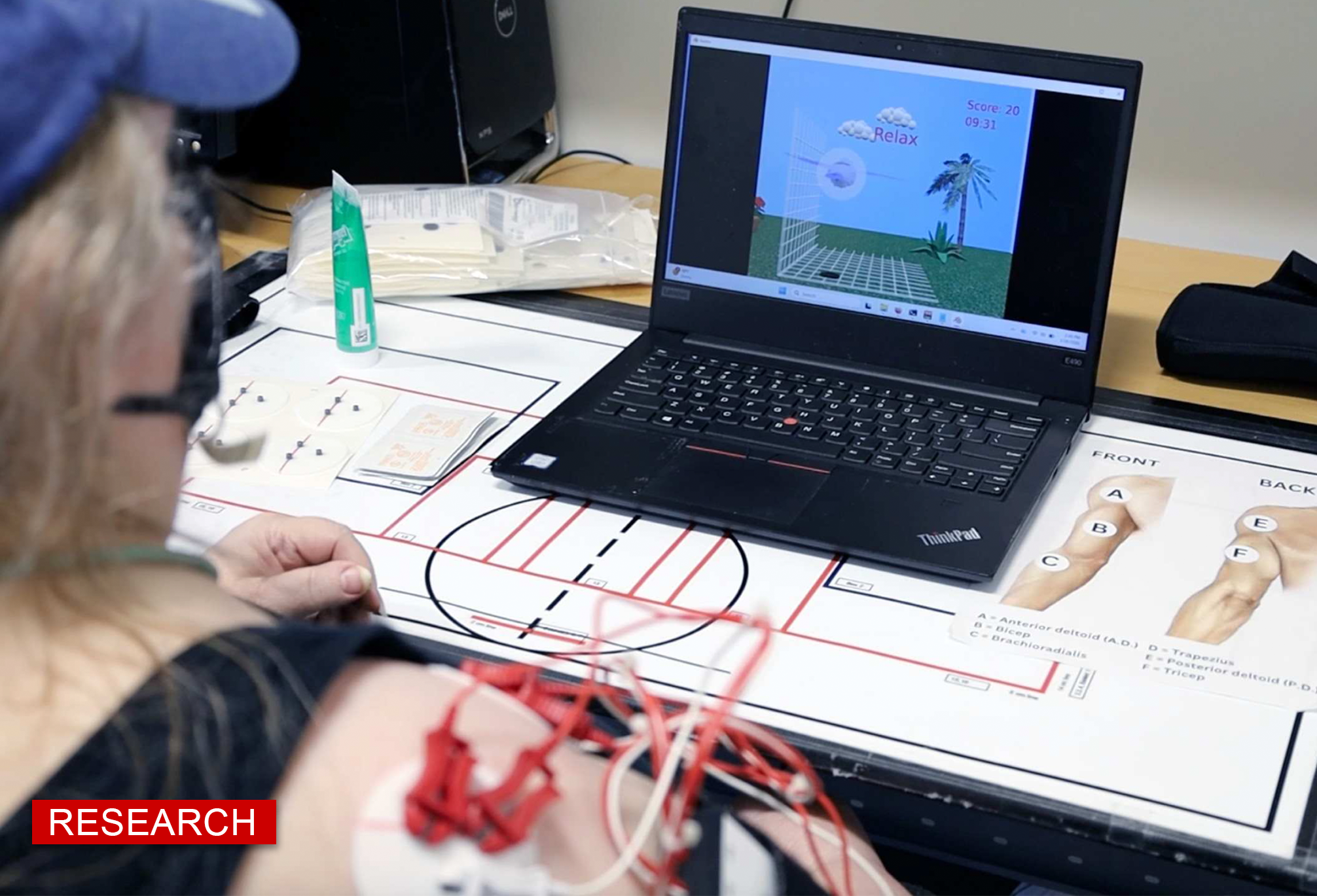
The home-based therapy uses a system called MINT, short for myoelectric interface for neurorehabilitation. The system combines a wearable device placed on the impaired arm with a laptop-based video game. Instead of using a regular controller, players use electrical signals from their arm muscles to control movement inside the game.
The study focused on chronic stroke survivors with moderate to severe arm impairment. Participants trained for six weeks, mostly from home, while playing a 1990s-style game that required them to activate specific muscles. One task involved flying a helicopter on the screen toward a moving target.
The goal was not just to make therapy more entertaining. Researchers designed the game to help retrain the connection between the brain and arm muscles. After a stroke, some survivors experience abnormal muscle co-activation, where muscles fire together when they should move separately. That can make reaching, lifting, or straightening the arm difficult.
MINT was built to help users practice separating those muscle signals. As the game became more difficult, players had to gain better control over individual muscle activity to improve their performance.
According to Northwestern, participants who received the game-based muscle training improved arm function by as much as 7.8 times more than those in the control group after six weeks. Some participants continued improving even after the therapy ended.
The study was published in Neurorehabilitation and Neural Repair. A PubMed listing for the research says home-based MINT conditioning, especially the three-muscle version, was feasible, reduced co-activation, and improved arm movement and function.
The at-home design is an important part of the research. Rehabilitation can require many repetitions, but access to frequent therapy can be limited by cost, transportation, scheduling, or distance from a clinic. By using a laptop and a wearable device, the system allowed participants to complete more practice sessions outside a traditional therapy setting.
Northwestern’s report said the technology is still being developed. Researchers are working with bioelectronics expert John A. Rogers to make the wearable device fully wireless. They also plan to improve the games and explore whether the same approach could help stroke survivors with leg movement.
Stroke remains a major cause of long-term disability, and arm recovery can be one of the most difficult parts of rehabilitation. The MINT system is not a replacement for medical care or prescribed therapy, but the study adds to growing research showing how video games and wearable technology may help make rehabilitation more accessible, repetitive, and engaging.
Sources: Northwestern University, Medical Xpress, PubMed.






0 Comments