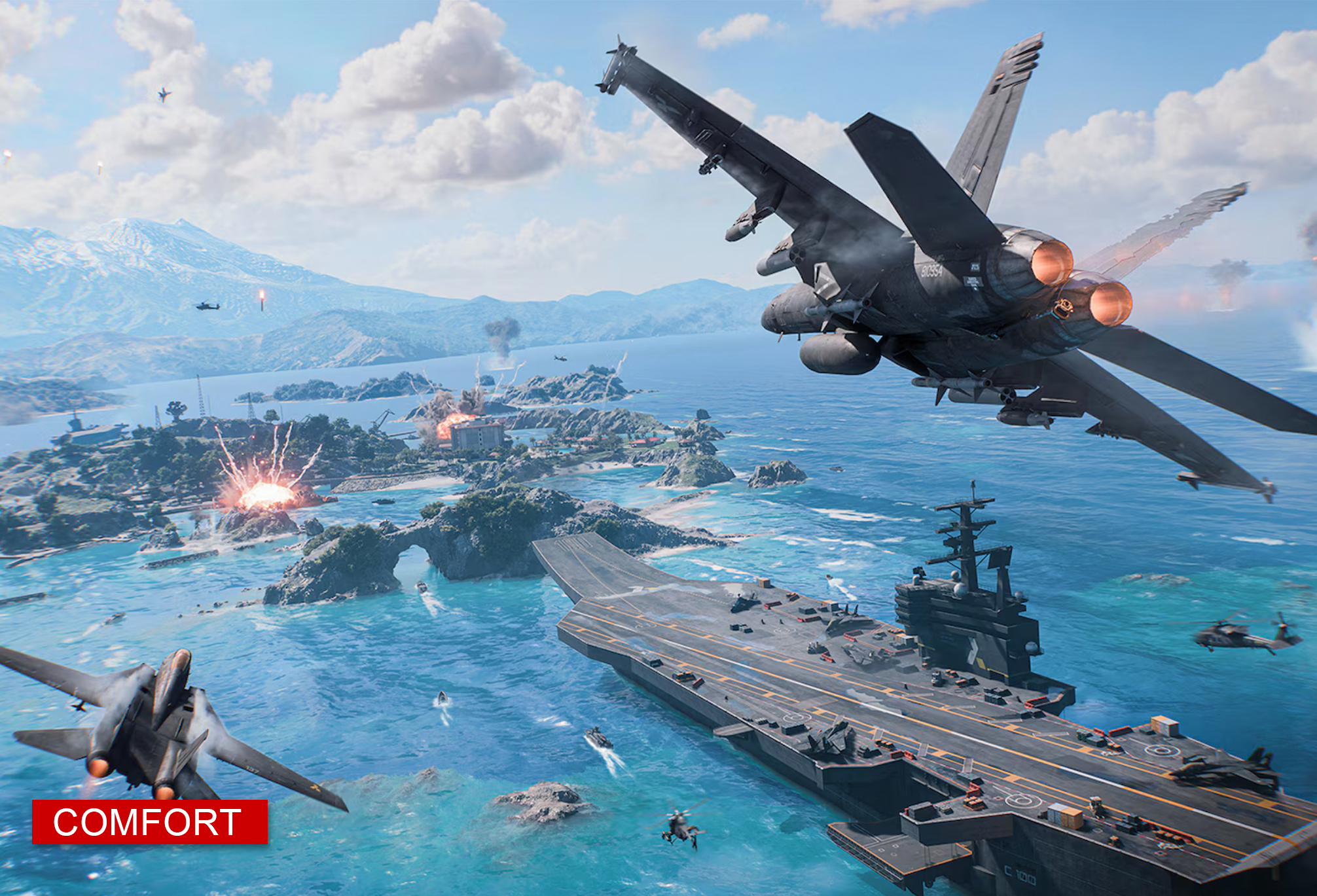
Battlefield 6 is heading back to sea. Naval warfare arrived in the game on July 21 with the launch of Season 4: Pacific Front. The update gives squads more room to fight across the water, brings two boats into multiplayer, and adds a wave system that can affect how battles unfold.
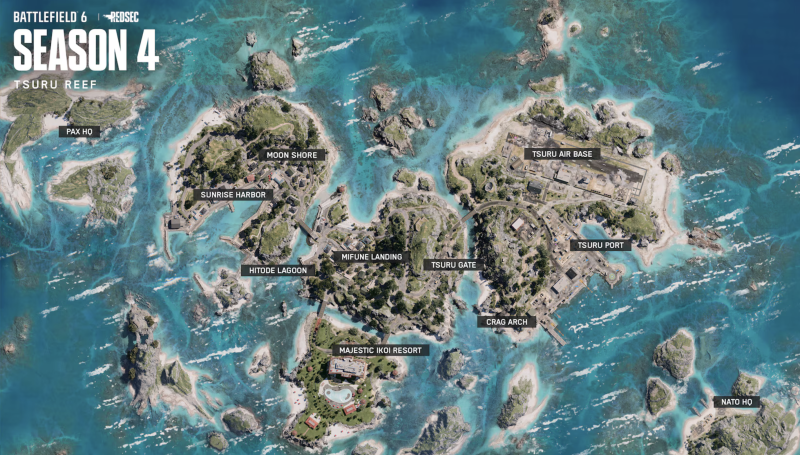
Tsuru Reef leads the update as the biggest map introduced in Battlefield 6 to date. The fictional Pacific island chain includes a military base, an abandoned waterfront community, a luxury resort, and wide stretches of open ocean.
Players are not limited to moving between the islands by helicopter or aircraft. Some objectives can be approached directly from the water, while shallow channels create additional routes for infantry and boats.
The map was designed to keep land, air, and sea combat connected. A squad might begin by crossing the ocean in a patrol boat, provide fire from the shoreline, and then continue on foot to capture an objective. Aircraft can attack boats from above, while Engineers on land can target vessels that move too close to shore.
Two naval vehicles are available at the start of the season. The 7.7-meter NSW RHIB is a light, four-seat transport boat equipped with a mounted machine gun. Its speed makes it useful for moving squads, reaching objectives, and attacking from unexpected directions.
The RCB-90 is a heavier two-seat patrol boat designed for direct combat. The driver controls a 30mm autocannon and missiles, while the second player operates a weapon that can fire 120mm mortar rounds. It is slower than the RHIB but better prepared to trade fire with vehicles and targets along the coast.
That difference gives each boat a clear purpose. The RHIB is built to move quickly and carry a squad. The RCB-90 is made to hold territory, protect an approach, or support teammates fighting on land.
The boats also have to deal with Battlefield’s new dynamic wave system. Open water is rougher than the calmer channels found between the islands. Large waves can push boats off course, interfere with a gunner’s aim, and briefly block a player’s view of the enemy.
The waves can create problems, but they can also provide cover. A boat crew may be able to disappear behind the water long enough to change direction, escape incoming fire, or prepare an ambush.
The update changes more than vehicle movement. Boats create wakes, buoyant equipment interacts with the water, and underwater explosions can be used during combat. Bullet penetration through the water varies by ammunition caliber.
Players can now drag and revive teammates while in the water. That gives squads a chance to recover someone who was knocked out during an amphibious landing or forced to abandon a damaged boat.
The return of naval warfare brings another layer of teamwork to a series already known for combining infantry, vehicles, and aircraft in the same battle. A patrol boat is much more effective when its crew communicates, keeps moving, and supports the rest of the squad rather than operating on its own.
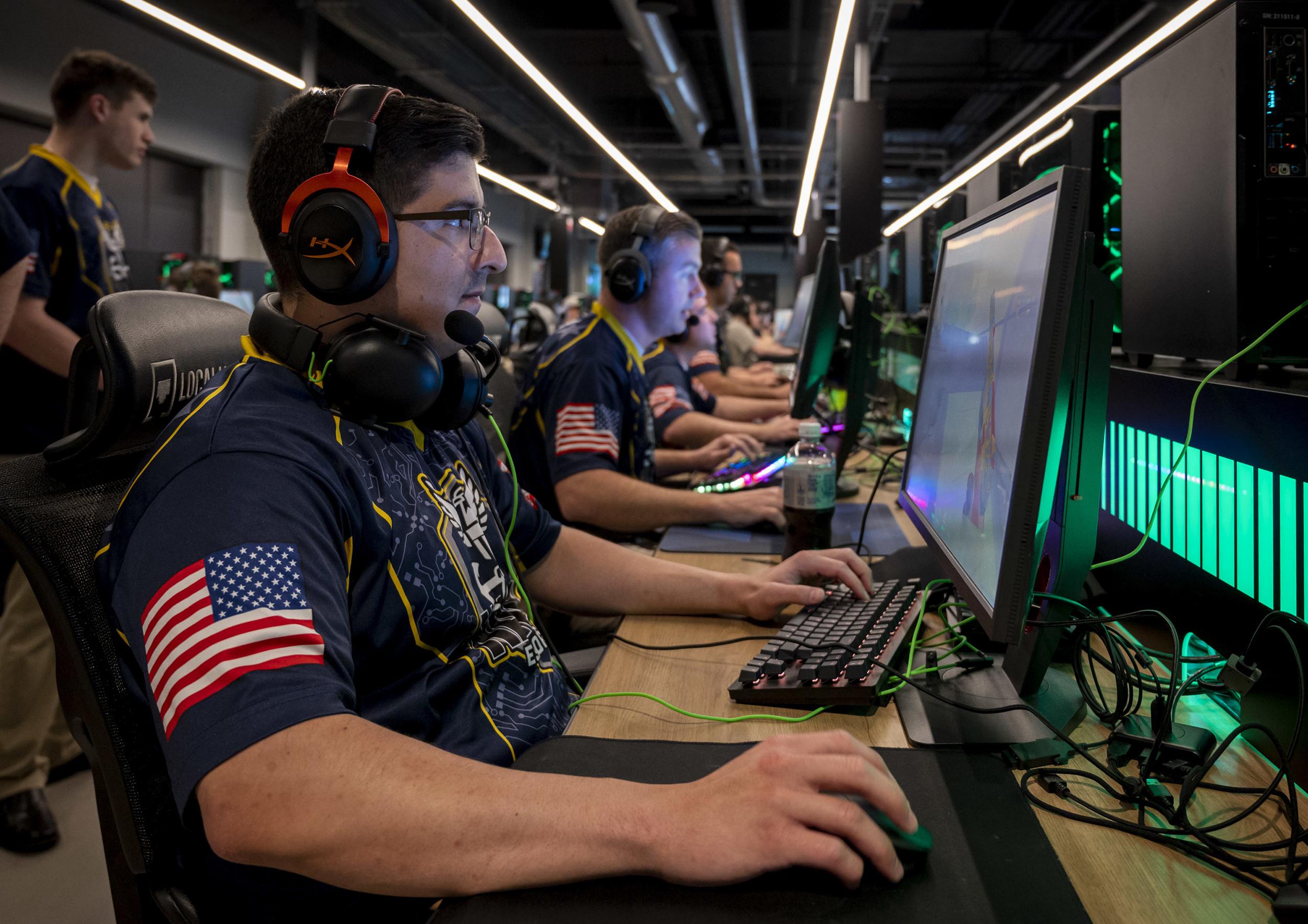
The game is not intended to recreate military service, but its larger battles depend on crews sharing information and carrying out separate jobs toward the same objective. The teamwork required to crew the boats may feel familiar to Veterans and Service Members.
Tsuru Reef is only the beginning of the season’s naval content. Wake Island, a longtime favorite among Battlefield players, is set to return on Aug. 18. The reworked map will include an offshore aircraft carrier. It will arrive alongside a Top Gun collaboration.
The final phase of Season 4 begins Sept. 15 with the Tidal Strike update, which will add new challenges, Portal updates, and additional REDSEC content.
For ALG communities, the naval update could provide a good reason to bring a squad together and return to Battlefield 6.





0 Comments