
The Department of Veterans Affairs (VA) is expanding its use of virtual reality and other immersive technologies to help Veterans manage chronic pain, PTSD, anxiety, and physical rehabilitation.
According to an October 19 VA report, immersive technology is being used at more than 100 VA medical centers and outpatient clinics nationwide, supporting nearly 8,000 recorded Veteran experiences.
The technology includes virtual reality (VR), augmented reality (AR), and mixed reality, which allow users to interact with computer-generated environments and activities. While many people associate VR headsets with video games, VA is using similar technology as another option for Veterans receiving medical care.
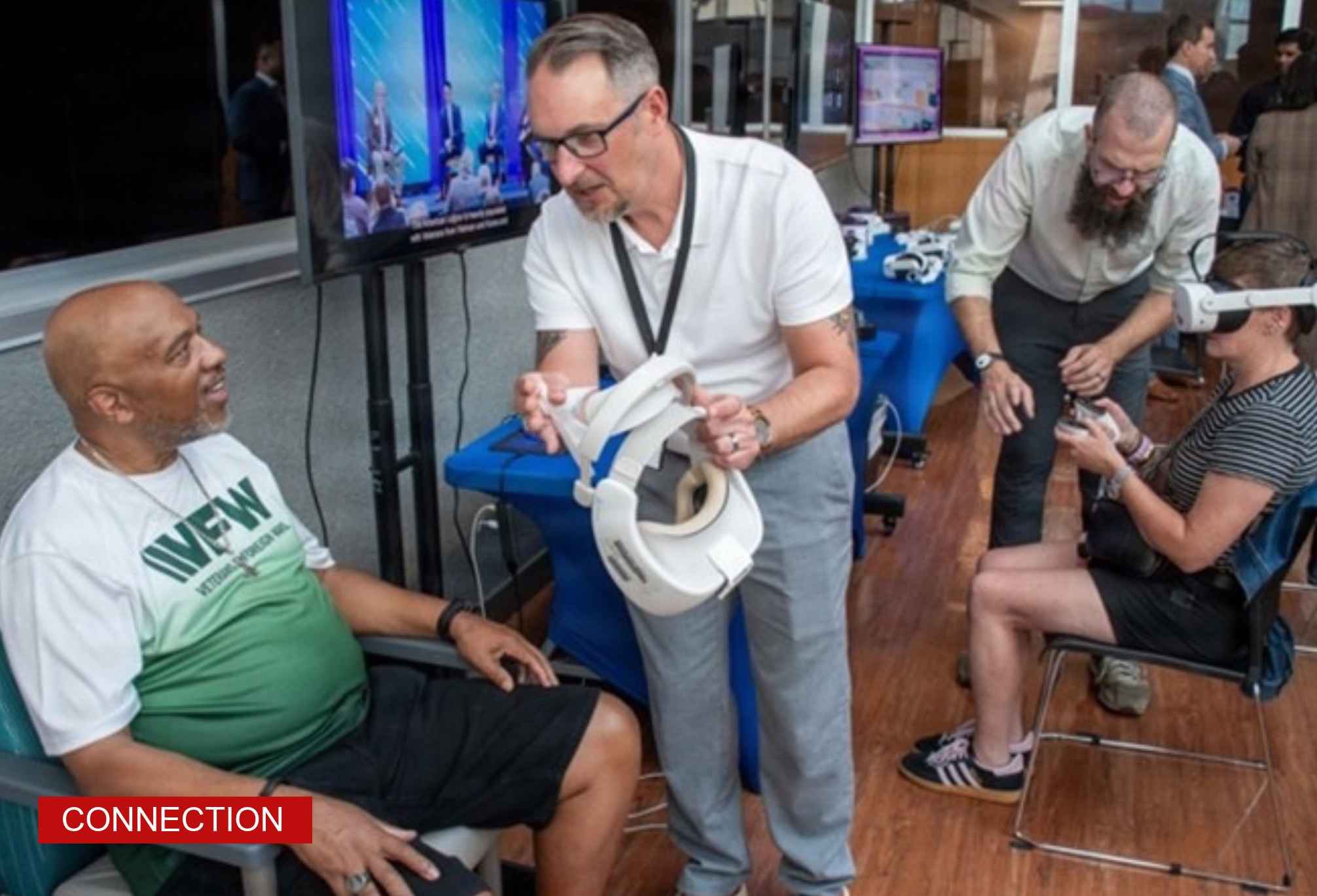
At the Washington, D.C., VA Medical Center, Veterans recently participated in an Immersive Demo Day, where they tested VR headsets and interactive applications designed to support mental and physical health.
Some participants explored peaceful virtual environments to help with relaxation, while others tried activities that encouraged movement, concentration, and physical engagement.
One Veteran who tried a virtual nature experience said it helped with symptoms of PTSD.
“It was great. It was what I needed. I have PTSD, and waterfalls really help me,” the Veteran told VA.
VA is exploring immersive technology for several purposes, including pain management, addiction recovery, neurological assessments, physical therapy, and recreational therapy.
The technology can transport users into simulated environments without requiring them to physically travel. Some programs use guided exercises or calming scenery, while others incorporate game-like activities that encourage Veterans to move or complete rehabilitation tasks.
One example is Army Veteran Jeffrey Brunnelson, whose recovery after multiple strokes included virtual reality activities. In an April VA report, Brunnelson described using the game Real VR Fishing to enjoy a hobby he could not always participate in physically.
He also used virtual reality for guided meditation, watching movies, and continuing exercises at home. According to VA, he eventually progressed from using a specialized arm support device during occupational therapy to maintaining some of his exercises with a VR headset.
VA has also reported encouraging results from Veterans who tried virtual reality for pain and anxiety.
In a February 2026 report, VA said responses from more than 4,900 Veterans showed average decreases of 29% in both anxiety and perceived pain after VR sessions. The department cautioned that those findings came from self-reported assessments rather than a controlled research study.
The technology is not intended to replace traditional medical care. Instead, VA is examining how immersive activities can be used alongside existing treatments and rehabilitation programs.
VA Immersive, the national program supporting these efforts, helps medical facilities introduce the equipment, train employees, and collect feedback from Veterans.
The department is also working with the Defense Health Agency to explore how immersive technology could benefit Service Members and Veterans. During a joint demonstration in Washington, D.C., in July, participants tested applications involving mental health support, physical activity, and interactive rehabilitation.
Among them was retired Marine Corps Lt. Col. Carrie Howe, who tried a mixed reality game designed to encourage movement and engagement. Howe told the Defense Health Agency that the experience could help people who struggle to get started with everyday activities.
VA officials say they want immersive technology to become a more familiar part of Veteran care as additional facilities adopt the programs. Availability and specific applications will depend on individual VA medical centers and their services.
More information about the program is available through VA Immersive.










0 Comments