
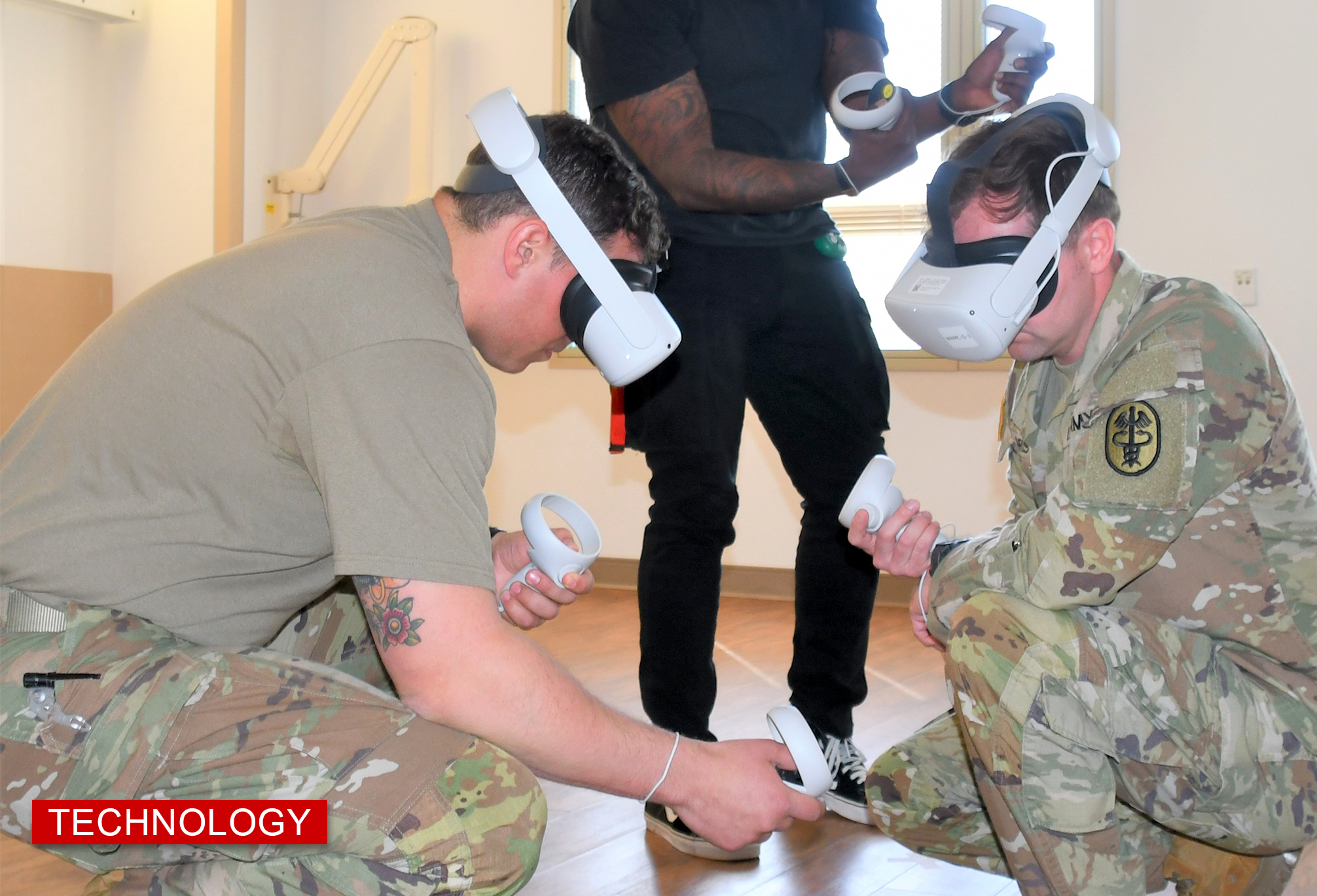
Virtual Reality, commonly associated with gaming, is finding a growing role in military training and health care. Soldiers and medical teams are using simulated environments to sharpen trauma response, preview missions, learn unfamiliar platforms, assist with maintenance, evaluate developing equipment, and support recovery.
A digital exercise can be restarted, modified, and reviewed almost immediately. Instructors can change the conditions, observe how participants respond, and give them another attempt before they move into live training.
Practicing Lifesaving Care in Virtual Combat
Womack Army Medical Center reports that its VR program places medical personnel in simulated battlefield emergencies involving penetrating wounds, blast-related trauma, and several casualties arriving at once.
Participants must determine who needs care first, communicate with the rest of the team, and follow Tactical Combat Casualty Care procedures while the virtual emergency continues to unfold.
Hospital personnel may have limited exposure to the injuries commonly associated with combat. The simulations allow medical teams to make time-sensitive decisions, repeat complex treatments, and review their response with instructors after each exercise.
The portable equipment also allows medical teams to train without organizing a large field event or reserving a specialized site each time they need to refresh their skills.
Reviewing Missions Before Going to the Range
Army units can use immersive rehearsals to preview an operation before live training begins.
Soldiers may examine the terrain, practice moving through structures, coordinate actions with teammates, and respond to changing threats. Leaders can alter the scenario to see how well the unit communicates when the original plan no longer fits the situation.
Army officials have described virtual exercises as an additional layer of preparation rather than a substitute for training in the field. A digital walk-through can uncover unclear responsibilities, communication breakdowns, or weaknesses in a plan before the unit reaches the range.
Units can also gain more repetitions without adding mileage to vehicles or placing additional wear on weapons and other equipment.
Becoming Familiar With New Equipment
Virtual models allow Soldiers to explore aircraft, vehicles, and control systems before they begin training on the actual equipment.
Aircrews can work through inspections, cockpit routines, crew coordination, and emergency procedures without starting an aircraft or using available flight hours. Maintainers can locate major components and review the order of a repair before beginning work on the physical system.
This type of preparation can be useful when a unit is receiving newly fielded equipment or when the actual platform is unavailable because it is being operated, repaired, or used for another training requirement.
Giving Maintainers Help During a Repair
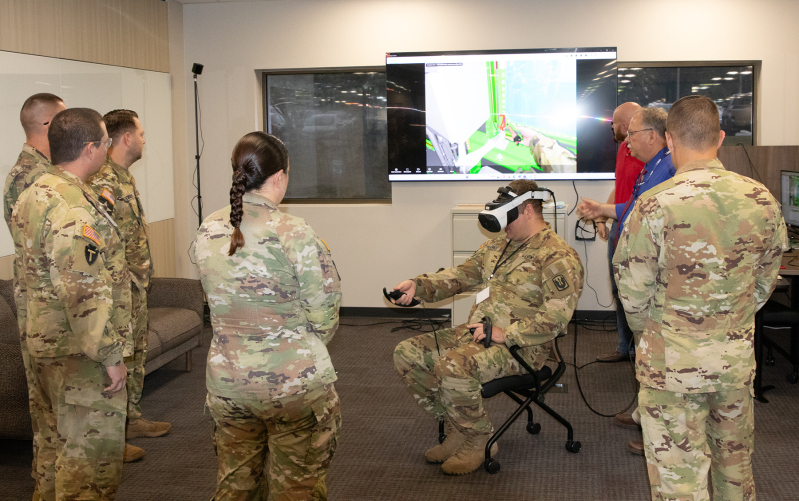
Augmented reality differs from VR because it keeps the real equipment in view while adding useful digital information.
Through a headset, a maintainer could identify a component, see the next action in a procedure, consult a technical illustration, or receive a safety reminder without repeatedly stepping away from the job to check a manual.
Some systems can also connect the Soldier with an experienced technician in another location. The technician can view the same work area, ask questions, and guide the troubleshooting process without traveling to the unit.
Military demonstrations indicate that this approach could help newer maintainers complete unfamiliar work and reduce the amount of time a vehicle or other system remains unavailable.
Gathering Soldier Feedback Earlier
Military development teams are also creating virtual versions of proposed aircraft and vehicles so Soldiers can examine them before production begins.
Operators and maintainers can check whether controls are within reach, displays are easy to understand, crew areas provide enough room, and important components can be accessed for repairs.
Army development programs say reviews conducted at this stage allow engineers to address concerns while the system is still being designed, rather than waiting until changes require rebuilding physical equipment.
Adding New Tools to Rehabilitation
Military treatment centers are also using immersive technology during rehabilitation.
A clinician can create activities that challenge balance, vision, movement, attention, and the ability to respond to several demands at once. The difficulty can be adjusted as the Service Member improves, while recorded results help the medical team measure progress across multiple sessions.
Researchers continue to examine virtual approaches for post-traumatic stress disorder and traumatic brain injury. Those treatments remain under evaluation, but the studies show how immersive technology may have a place in both military readiness and long-term recovery.







0 Comments